
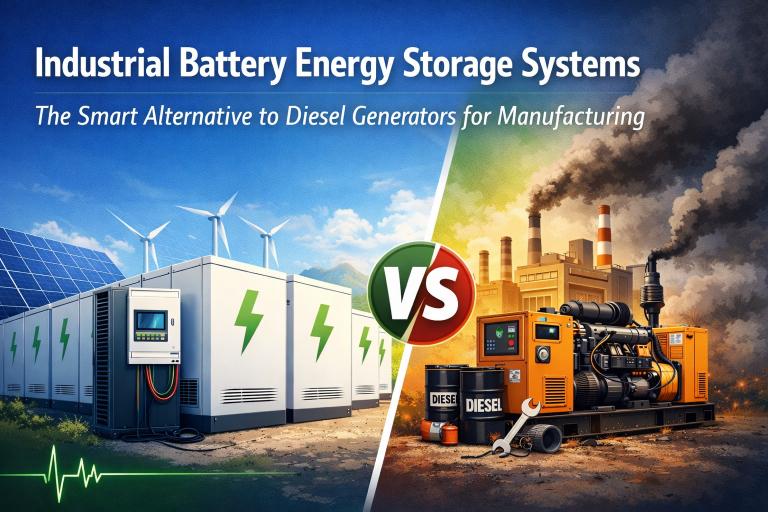
India’s manufacturing and industrial sector is growing rapidly, but one major challenge continues to impact productivity, operational efficiency, and profitability — unreliable power supply. Power outages, voltage fluctuations, and peak demand charges create significant risks for factories, commercial facilities, and production units.
For decades, industries have relied on diesel generators as the primary industrial power backup solution. However, rising diesel prices, environmental regulations, and sustainability goals are pushing industries to seek smarter alternatives.
This is where the industrial battery energy storage system is transforming the landscape.
Modern industrial battery backup systems provide reliable, cost-effective, and environmentally friendly power backup while improving energy efficiency and reducing operational costs. From manufacturing plants and warehouses to commercial buildings and processing units, energy storage is becoming a strategic investment rather than just a backup solution.
In this comprehensive guide, we will explore how industrial energy storage solutions work, why they are replacing diesel generators, and how businesses can achieve better ROI through advanced battery storage technology.
Problems with Diesel Generators in Industries
Diesel generators have long been considered a reliable backup power option, but they come with several limitations that directly impact industrial operations and profitability.
1. Rising Fuel Costs and Operating Expenses
One of the biggest disadvantages of diesel generators is the ongoing cost of fuel. Diesel prices are volatile and continue to rise, making backup power expensive for industries with frequent outages.
Compared to a commercial energy storage system, diesel generators require:
- Continuous fuel purchases
- Regular maintenance and servicing
- Engine component replacements
- Lubricants and filters
Over time, the total cost of ownership becomes significantly higher than investing in an industrial battery storage system.
2. Environmental and Compliance Challenges
Industries today face strict environmental regulations related to emissions and sustainability. Diesel generators produce:
- Carbon emissions
- Noise pollution
- Harmful particulate matter
- Fuel storage risks
Switching to green power battery solutions helps companies reduce their carbon footprint and align with ESG (Environmental, Social, Governance) goals.
3. Downtime Risks and Operational Disruptions
Diesel generators require manual intervention, startup time, and regular maintenance. During critical operations, even a few seconds of downtime can result in:
- Production losses
- Equipment damage
- Data loss
- Safety hazards
Modern industrial UPS battery backup systems eliminate this problem by providing instant power during outages.
4. Inefficient Energy Utilization
Diesel generators operate inefficiently at partial loads, which is common in industrial environments. This leads to higher fuel consumption, lower efficiency, and increased maintenance costs. In contrast, industrial energy storage systems operate efficiently regardless of load conditions.
How Industrial UPS Battery Backup Systems Work?
An industrial UPS system integrated with battery storage provides seamless and uninterrupted power to industrial operations. Let’s understand the core components of an industrial battery backup solution.
1. Battery Energy Storage Unit
The battery is the heart of the system, storing electricity for later use. Modern systems use lithium-ion batteries due to:
- High energy density
- Faster charging
- Longer lifespan
- Low maintenance
These batteries form the foundation of an industrial BESS system.
2. Power Conversion System (PCS)
The PCS converts stored DC power into AC power required by industrial equipment. It also manages charging and discharging cycles efficiently.
3. Energy Management System (EMS)
The EMS is the intelligent brain of the system. It controls:
- Energy usage optimization
- Load management
- Peak shaving
- Backup prioritization
- System monitoring
This ensures industries achieve maximum efficiency from their industrial energy storage solutions.
4. Thermal Battery Management
Temperature control is critical for battery performance and safety. Advanced thermal battery management systems regulate temperature using sensors and cooling mechanisms. A robust thermal management battery system increases battery life and ensures safe operations in demanding industrial environments.
Energy Storage for Industries: Cost Comparison with Diesel
When comparing diesel generators with industrial battery storage systems, businesses must evaluate long-term financial impact rather than only upfront cost.
Diesel Generator Costs
- Fuel expenses (recurring)
- Maintenance and servicing
- Spare parts replacement
- Labor costs
- Environmental compliance
Industrial Battery Storage Costs
- Initial installation investment
- Minimal maintenance
- No fuel costs
- Longer lifespan (8–15 years)
- Energy savings benefits
Over time, energy storage for industries proves significantly more economical than diesel generators.
Commercial and Industrial Energy Storage ROI
Investing in commercial and industrial energy storage is not just about backup power — it’s a strategic financial decision. Here are the major ROI drivers.
1. Peak Demand Charge Reduction
Industries often pay high electricity tariffs during peak demand periods. Battery storage enables peak shaving, load shifting, and demand optimization. This reduces electricity bills substantially.
2. Reduced Downtime Losses
Even short outages can cost manufacturing companies lakhs or crores in losses. A reliable industrial UPS power backup system prevents production delays, material wastage, and equipment downtime.
3. Solar Integration Savings
When combined with solar, an industrial solar energy storage system maximizes renewable energy usage. Benefits include lower grid dependency, faster solar ROI, reduced energy bills, and energy independence.
4. Maintenance Cost Savings
Compared to diesel generators, battery systems have fewer moving parts, lower servicing requirements, and predictable maintenance. This reduces long-term expenses.
5. Sustainability Incentives and Brand Value
Companies using commercial energy storage solutions benefit from green certifications, government incentives, improved brand reputation, and ESG compliance.
Industrial Solar Energy Storage System Integration
One of the biggest advantages of battery storage is its compatibility with solar energy systems. An industrial solar battery storage setup combines solar panels with batteries to create a reliable energy ecosystem.
How Integration Works?
- Solar panels generate electricity during the day.
- Excess energy charges the battery system.
- Stored energy is used during peak demand or outages.
- Grid power acts as backup when required.
This integrated approach creates a powerful industrial solar energy storage system.
Benefits of Industrial Solar Energy Storage
- Maximum Solar Utilization: Without storage, excess solar energy is wasted or exported at low tariffs. Storage allows industries to use more self-generated energy.
- Reduced Electricity Bills: Using stored solar power reduces reliance on expensive grid electricity.
- Energy Independence: Industries become less vulnerable to grid outages and tariff fluctuations.
- Sustainable Operations: Using renewable energy improves environmental performance and reduces carbon emissions.
Grid Scale Battery Storage and Industrial Benefits
While industries use dedicated systems, large utilities deploy grid scale battery storage for power stability. These grid scale energy storage projects:
- Stabilize power supply
- Support renewable integration
- Reduce outages
- Improve power quality
Industries connected to such grids benefit from more reliable electricity infrastructure.
Advantages of Industrial Battery Energy Storage System
Modern industrial battery energy storage systems provide numerous benefits compared to traditional power backup methods.
- Instant Power Backup: Unlike generators, batteries provide immediate power without startup delays.
- Lower Operational Costs: No fuel costs and minimal maintenance significantly reduce expenses.
- Scalable and Flexible Design: Systems can be expanded based on business growth.
- Environmentally Friendly: Battery storage reduces emissions and supports clean energy adoption.
- Smart Energy Management: Advanced software optimizes energy usage and improves efficiency.
- Long Lifecycle: Lithium battery systems offer long operational life with consistent performance.
Thermal Management and Safety in Industrial BESS Systems
Safety is a top priority in industrial applications. Advanced thermal management battery system features include:
- Temperature monitoring sensors
- Cooling systems
- Fire protection mechanisms
- Smart diagnostics
- Fault detection
These technologies ensure safe and reliable operation of the industrial BESS system.
Why Are Industries Choosing Battery Storage Over Generators?
Businesses are rapidly transitioning toward industrial energy storage systems due to several strategic advantages:
- Cost Predictability: Electricity costs become more predictable compared to fluctuating diesel prices.
- Operational Efficiency: Automated systems eliminate manual intervention.
- Sustainability Goals: Companies achieve carbon reduction targets more easily.
- Government Policies: Renewable energy and storage incentives encourage adoption.
- Competitive Advantage: Lower energy costs improve profitability and competitiveness.
The Future of Industrial Energy Storage in India
India is witnessing rapid growth in renewable energy deployment, creating strong demand for energy storage for industries. Key future trends include falling battery prices, government incentives for storage adoption, growth of solar plus storage projects, smart grid integration, and AI-driven energy management systems. Industrial battery storage will become a core infrastructure component for manufacturing and commercial facilities.
Why Choose Enerveda for Industrial Energy Storage Solutions?
Enerveda provides advanced industrial energy storage solutions designed to meet the evolving needs of modern industries. Our solutions offer:
- High-performance lithium battery systems
- Intelligent energy management software
- Advanced thermal management technology
- Scalable system architecture
- Reliable industrial UPS integration
- Solar compatibility
- Long lifecycle performance
We help businesses transition from diesel dependency to clean, reliable, and cost-effective power infrastructure.
Smart Energy for Smart Manufacturing At Enerveda
The transition from diesel generators to industrial battery energy storage systems is no longer a future concept, it is happening now.
Industries that invest in modern industrial battery backup systems gain reliable power supply, reduced energy costs, improved operational efficiency, environmental sustainability, and long-term financial benefits.
As India moves toward a cleaner and more resilient energy future, battery storage will play a central role in powering industrial growth. For manufacturers and commercial facilities seeking uninterrupted operations and smarter energy management, industrial battery storage is the ultimate solution.
Frequently Asked Questions (FAQs)
Q1. What is an industrial battery energy storage system?
Ans. An industrial battery energy storage system is a large-scale battery solution that stores electricity and provides backup power to industrial facilities during outages or peak demand periods.
Q2. How is an industrial UPS battery backup system different from a generator?
Ans. An industrial UPS battery backup system provides instant power without fuel consumption, noise, or emissions, while generators require fuel, maintenance, and startup time.
Q3. Can industrial battery storage work with solar power?
Ans. Yes, an industrial solar battery storage system integrates with solar panels to store excess energy and use it when needed, improving energy efficiency and reducing costs.
Q4. What is the lifespan of industrial battery storage systems?
Ans. Modern lithium-based industrial battery storage systems typically last between 8 to 15 years, depending on usage and maintenance.
Q5. Is industrial energy storage cost-effective?
Ans. Yes, commercial and industrial energy storage systems reduce electricity bills, eliminate fuel costs, minimize downtime losses, and provide strong long-term ROI.